Eyewitness Bloody Sunday – The Truth
“There were several notable television documentaries, mainly from British channels, and some influential books and newspaper articles. Particularly important was the publication of Don Mullan’s book, Eyewitness Bloody Sunday, in 1997. This was a collection of eyewitness contemporaneous accounts of the events of Bloody Sunday that had been gathered by NICRA (Northern Ireland Civil Rights Association) and lain unnoticed for twenty-five years…”
– Bishop Edward Daly, ‘A Troubled See’
 Eyewitness Bloody Sunday – The Truth (Wolfhound Press, Dublin 1997; Robert Rinehard Publishers, USA 1997; Merlin Publishing, 3rd edition, 2002) was Mullan’s first investigative book which became a bestseller in Ireland and has been described as ‘politically influential’. It is officially credited as a major catalyst in the establishment of the longest running and most expensive public inquiry in British legal history – The Bloody Sunday (Saville) Inquiry. Don Mullan was a schoolboy witness to the tragic events of Bloody Sunday and vividly recalls the shooting dead of Michael Kelly.
Eyewitness Bloody Sunday was based on 100 of 700 eyewitness accounts of the Bloody Sunday massacre, including his own. The book was produced in collaboration with the Bloody Sunday families and wounded and the Bloody Sunday Justice Campaign. Mullan has always stated that his work built on the work of others before him and that the main credit for the historic achievements of the Campaign was the Bloody Sunday families and wounded.
The book created a sensation when Don Mullan offered a plausible hypothesis that three of the Bloody Sunday dead were shot by a British Army sniper firing from the vicinity of the Derry Walls. A strong supporter of his hypothesis was Dr Raymond McClean, a local GP and former SDLP Mayor of Derry who initially set out to disprove Mullan’s theory but eventually concurred. Dr McClean had attended a number of post-mortems of the Bloody Sunday dead and had noted that the three whom Don Mullan suspected had been shot by a sniper, had almost identical 45% downward trajectory wounds.
After careful investigation, Mullan’s theory was seized upon by Britain’s Channel Four News who produced their first of a series of Bloody Sunday specials based on his hypothesis. The book was headlined in The New York Time World News section on the 30 January 1997, the 25th anniversary of the massacre, which recorded: “The atmosphere has been roiled in recent days by the province-wide debate on the new book [by] Mr. Mullan…”.
Don Mullan and Dr Raymond McClean later authored ‘Bloody Sunday: The Breglio Report’ (Bloody Sunday Justice Campaign 1997), based on an independent investigation carried out by a US based ballistics expert, Robert J. Breglio. Mullan had been directed to Breglio by his friend, former US Congressman Joseph Crowley (D-NY). Breglio made it clear from the outset that “I will call it as I see it.” Bluntly asserting his independence which is exactly what Mullan and Dr McClean wanted. Robert J. Breglio concluded that Michael McDaid, John Young and William Nash had been shot from the vicinity of the Derry Walls
Prior to the publication of Mullan’s book, Bloody Sunday was seen by the Irish establishment as having been hijacked by Sinn Fein and violent Republicanism and was, therefore, kept at arm length. However, Mullan’s humanitarian and human rights background created a space for the Irish Government to engage.
Mullan was contacted by officials at the Department of Foreign Affairs and the Department of An Taoiseach shortly after the publication of his book in January 1997 and for two years, in the lead-up to the new Bloody Sunday Inquiry, he was the conduit between the Irish Government and the Bloody Sunday families and wounded. During that period he played a key role in organising a number of visits to Dublin, Belfast and London, to meet British Secretary’s of State for Northern Ireland, Sir Patrick Mayhew and Mo Mowlan; Irish President Mary Robinson; and the first meeting ever between an Irish Taoiseach and the Bloody Sunday families and wounded.
A major outcome of the meeting with An Taoiseach John Bruton was the announcement that he would instruct Civil Servants to critically evaluate all of the new evidence coming forward, including Mullan’s theory of three victims having been shot from the vicinity of the Derry walls.
Mullan was entrusted by the Irish Government to read the penultimate draft of its dossier ‘Bloody Sunday and the Report of the Widgery Tribunal – The Irish Government’s Assessment of the New Material’. For two days in June 1997, he was given a room within the Department of Foreign Affairs and given privileged access to the highly sensitive dossier. His comments and observations were incorporated into the final draft which was presented to the new Labour Government of Prime Minister Tony Blair MP, in June 1997. The impact of Irish Government’s Report increased momentum towards persuading the British Government to establish a new Inquiry.
On the 30th January 1998, the 26th anniversary of Bloody Sunday, little more than a year after the publication of Eyewitness Bloody Sunday, the British Prime Minister, Tony Blair, announced the setting up of a new Bloody Sunday Inquiry.
On 3 April 1998, the new Bloody Sunday Inquiry opened at the Guildhall in Derry. It became the longest running and most expensive Public Inquiry in British Legal History.
What was, in fact, the 2nd Bloody Sunday Inquiry, published its report on 15 June 2010. It concluded that all of the dead and wounded were innocent. A statement read on behalf of the Families and wounded declared: “The victims have been vindicated. The Parachute Regiment has been disgraced. The truth has been brought home at last. Widger’s great lie has been laid bare.”
The most remarkable and unexpected outcome was the statement made by the British Prime Minister, David Cameron, who, in accepting the findings of the Saville Report, described the brutal events of Bloody Sunday as ‘unjustified and unjustifiable’ before making an historic apology on behalf of the British Government. It was a moment of healing in the festering wound of British Colonialism in Ireland.
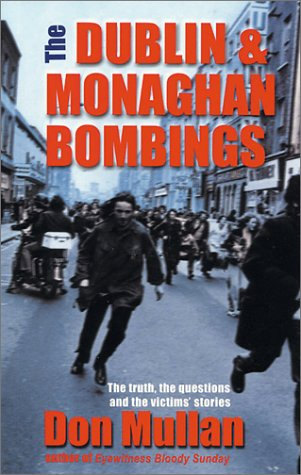


 Over dinner at an Italian restaurant in midtown Manhattan in 2004, Don Mullan told Irish actor, Gabriel Byrne, about the positive influence the great English goalkeeper, Gordon Banks, had on his growing up in war ravaged Northern Ireland. The story also included Mullan’s fondest memory of his father, who somehow managed to arrange for his teenage son to meet Gordon Banks just six weeks after Banks had pulled off what many consider the greatest save in World Cup history from Brazil’s Pelé during the 1970 Mexico World Cup.
 To Don Mullan, his boyhood memoir is important as it offers a unique insight into the period immediately preceding the outbreak of the Northern Ireland troubles:
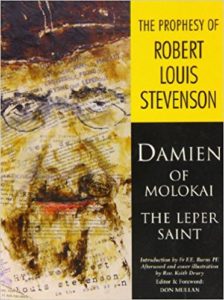 The political and journalist world can boast of very few heroes who compare with
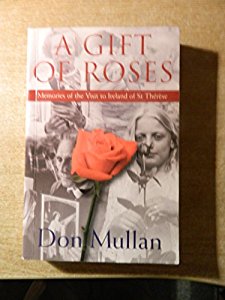 On Easter Sunday 2001 the relics of St. Therese – a small casket containing a thighbone and foot bone – at the start of an eleven-week pilgrimage. Among those who turned out for the event was Don Mullan, a bestselling Irish author and media producer. Mullan had mixed feelings about the whole affair. Advanced publicity for the relic tour had promised the arrival of an anonymous “she” who would be bigger than U2 and draw larger crowds than Madonna. When the “she” turned out to be the bones of a nineteenth-century saint, Mullan and others wondered if the organisers had lost their minds. They were predicting that a million people might come out to see the reliquary as it made its way across the country.
 In 2011, in advance of the visit to Ireland of the USA’s first African-American President, Barack Obama, Don Mullan re-published the Narrative of the Life of Frederick Douglass – an American Slave to mark the historic occasion, in both softback and as a limited edition hardback.
 This intriguing book explores the question of whether there is life after death, not through scientific or academic methodology, but by allowing people from around Ireland and the world to tell their stories of having been contacted by the living dead.
 How many emails have you deleted recently offering you inherited millions from a mystery relative, or the uncollected winnings from an unheard of lottery? Rather than press delete, Don Mullan decided to take the Scammers on at their own game…