I’ve previously described Don Mullan as ‘a safe pair of hands’ and I’m confident that he will succeed in bringing these projects to fruition.
I have fond memories of when we worked together on the movies BLOODY SUNDAY which was inspired by his book ‘Eyewitness Bloody Sunday’, and also on the film OMAGH. Don’s commitment to helping to bring about peace and reconciliation in Northern Ireland is unwavering and his achievements to date have been impressive.
Don’s interests range widely, and it is always stimulating to engage with someone who is so passionate and committed. I know if anyone can achieve the goals of Hope Initiatives International, it will be him.
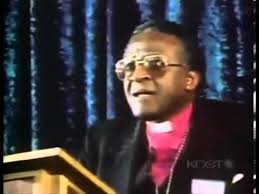
“I went once to a so-called ‘Homeland’ – which are dumping grounds for the displaced people. I met there a little girl coming out of a hut where she lived with her widowed mother and sister. I asked her, “What do you do for food?” She answered, “We borrow food.” I looked around and wondered who even would have enough food to loan. I then asked her, “What do you do when you cannot borrow food?” She replied, “We drink water to fill our stomachs.”
“We drink water to fill our stomachs in a country that is a net-exporter of food to the world. People die of starvation in South Africa, not because there is no food, but because of deliberate Government policy.”
Bishop Desmond Tutu, Secretary-General, South African Council of Churches, Dublin, Ireland, 1984
Don Mullan was inspired to conceive and launch AFrI’s Great ‘Famine’ Project, based on the quotation above. It was delivered in Sean MacDermott Street Church during Bishop Desmond Tutu’s AFrI visit. Within it Mullan heard echoes of Ireland’s Great ‘Famine’ (1845-1852) during which a million people perished and another million fled Ireland as immigrants and refugees.
The Great ‘Famine’ Project was a multi-disciplined project that involved campaigning, lecture tours, theatre, publications and extensive news items, including three consecutive years of coast-to-coast coverage by the US networks ABC, NBC and CBS. Mullan was one of the first in the Irish world to recognise the approaching 150th anniversary as a ‘unique historical moment’.
Mullan consistently described its purpose as focusing on the moral imperative of harnessing the memory of a major injustice, not for bitterness or hatred, but as a catalyst to show solidarity with today’s marginalised and, inspired by Michael Davitt’s 1879 Land League, to work for systemic change.
The several initiatives and legacy ideas Mullan inspired are recorded in the following pages.
Don’s CV speaks for itself. He is, amongst many talents: an experienced justice campaigner who effectively helped us during the darkest days of South African apartheid; a bestselling author and an accomplished public speaker with three investigative books that contributed to the establishment of three inquiries (including the longest and most expensive Public Inquiry in British legal history); the co-producer of a trilogy of award-winning movies about the Irish conflict; a documentary filmmaker; creator of the first mobile/cell phone photographic exhibition in the world; the concept developer of three significant historical monuments and campaigns in Ireland, England, the USA and Belgium. In 1993 Don was diagnosed with dyslexia.
Don’s strength is in harnessing key historical moments through which he seeks to heal the hurts of history by arguing the moral imperative, and benefits, to be achieved by applying the lessons of yesterday to help mend and change the present.
The 1988 Doolough Famine Walk was the first major initiative undertaken by Don Mullan for AFrI in the lead-up to the 150th anniversary of Ireland’s Great Famine.
The Doolough Valley, Co. Mayo
Mullan was not interested in history for the sake of history, nor was he interested in harnessing the memory of the Great ‘Famine’ as an anti-British bludgeoning weapon – though he was never shy of naming British colonial culpability. Rather, his focus was on the contemporary world. He argued that if the Irish, at home and abroad, believed that the Great ‘Famine’ was a seminal injustice, then we had a moral imperative to harness that memory in support of people struggling with the injustice of poverty and hunger today in a world of plenty.
Mullan was particularly taken by the story of the Doolough Tragedy which he first came across in 1987 in a book by Áine Ní Cheanainn, The Heritage of Mayo (first edition 1982). In her book Ní Cheanainn had a chapter about the impact of the Great Famine on her native County Mayo, and finished with a story headed ‘The Doolough Tragedy’.
Mullan first read the story in bed one night and was so taken by it that the following day he read it to the AFrI staff.
Within a week, accompanied with his colleague Joe Murray, Mullan travelled to Mayo to explore the terrain. He recalls the impact of that journey as follows:
“I will never forget the feelings I had when, traveling south from the town of Louisburg, the Doolough Valley opened before us. We parked the car and went walking through the commonage. While a somber and tragic place, it is still one of the most beautiful and evocative valleys in Ireland, if not Europe. The long dark lake stretched for over a mile and a half towards a far shore, surrounded by the Mweelrea Mountains on either side, with Croagh Patrick to the east and the endless horizon of the North Atlantic Ocean hidden to the west. At that moment the possibility of re-creating the Doolough Walk, undertaken by 600 starving poor in March 1849, was born.”
The power of Mullan’s idea is illustrated by the fact that the Doolough Walk has been organized annually since 1988, apart from a couple of years, after his departure from AFrI in 1994, when it was dropped. However, popular demand encouraged AFrI to bring it back. While Mullan has nothing to do with the annual walk anymore, professionally it remains one of his most satisfying creations, allowing historical memory to act as a powerful catalyst in highlighting the plight of the world’s poor and dispossessed today.
The 1st Great Famine Walk in 1988
Logistically the walk is challenging to organize and required, and still does, the cooperation of the local Louisburgh community who work closely with AFrI.
The first walk was addressed by Fr Niall O’Brien, for whose freedom AFrI had campaigned in 1984. O’Brien’s speech eloquently linked the suffering of Ireland’s 19th Century dispossessed with the on-going suffering of the dispossessed of the Philippines and the majority world in the late 20th Century.
The power of the Doolough Walk should not be underestimated. For the first three years of the walk, Mullan was successful in attracting not just Irish television coverage, but also the three big US networks: NBC, CBS and ABC. For three years in a row, each of the broadcasters respectively carried a story about the Great ‘Famine’ coast to coast across the USA. There is little doubt that many of the subsequent Great ‘Famine’ initiatives that sprung up in the USA amongst Irish-American communities found their seed in those broadcasts.
Don Mullan addresses participants at the 1st Doolough Famine Walk in 1988
From a media perspective, the most successful Doolough Walk was in 1990, when AFrI invited representatives of the Choctaw Nation of Oklahoma to lead the walk. The invitation was due to the fact that their forebears sent US$170 in famine relief to Ireland in 1847.
In addition to RTE and the American network, ABC, Mullan also attracted the interest of Worldwide Television News who went on to broadcast a news piece on the walk in 56 countries worldwide. The coverage clearly demonstrated that AFrI, while small, could impact globally.
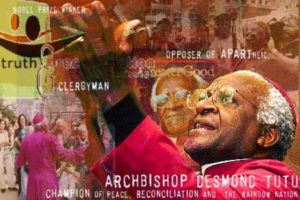
Amongst many high profile leaders of the Doolough Walk was the 1984 Nobel Peace Prize winner, Archbishop Desmond Tutu and his wife, Leah. At a press conference prior to the walk, he was asked why he had travelled from South Africa to such a remote part of the western world. With characteristic wit and humour he looked at the journalist asking the question and responded: “Why Bethlehem?”
Famine Walk 1994, lead by, amongst other, Gabriel Byrne, John Pilger and Waylon Gary White Deer.
Choctaw/Ireland Connection: During a lecture in upstate New York, Mullan learned of a little known story of a donation of $170 by the Choctaw Nation to Ireland in 1847, all the more remarkable considering they had suffered their ‘Trail of Tears’ removal from Mississippi to Oklahoma beginning in 1831. This story was important as it demonstrated the humanity of indigenous people, often characterized as ‘uncivilized’ by European colonizers who were responsible for their suffering, oppression and in some instances, their genocide.
The Choctaw’s participation in the AFrI walk in 1990 was broadcast in over 50 countries by Worldwide Television News (WTN). WTN, now part of the Associated Press, has the story listed in their archive, but it has not yet been digitised. Mullan was made an honorary Chief of the Choctaw Nation at the start of the walk, an honour he shares with former Irish President, Mary Robinson.
President Robinson followed Mullan’s lead in 1995, travelling to Oklahoma to thank the Choctaw for their humanity.
The Doolough Famine Walk has since been joined on several occasions by the distinguished Choctaw artist and author, Waylon Gary White Deer.
Initiatives which the Choctaw/Ireland connection inspired are, amongst others:
A National Geographic and Turner Broadcasting documentary, ‘When Ireland Starved’ (1994), presented by Irish actor, Gabriel Byrne and featuring Waylon Gary White Deer, Professor Christine Kinealy and Don Mullan;
The commissioning by the Irish State in 1997 of Choctaw artist, Waylon Gary White Deer, to produce a painting for the 150th anniversary, commemorating the Choctaw gesture. White Deer donated his $20,000 fee to Concern Worldwide;
A monument in Middleton, Co. Cork, unveiled by a Choctaw delegation in June 2017;
The connection has also inspired several poems, songs, artwork and radio and television documentaries. The most recent documentary was by RTE’s Nationwide on 7 March 2018.
The Long March, a children’s illustrated book by the award-winning artist author, Marie-Louise Fitzpatrick
Don Mullan’s work on variety of levels has been remarkable and significant. Perhaps best known as an investigative journalist and documenter of history, he laid out in explicit detail the tragedy of Northern Ireland’s Bloody Sunday in Eyewitness Bloody Sunday. But far from a simple book, his work formed the basis for a nonpartisan acknowledgement by all sides of the conflict, of the wrongs done. The critical investigation of his book helped make all aware of the reality of events and served as a critical reference piece for politicians, judges, and tribunals who sought to understand what happened on that fateful day. His work was fundamental to the eventual establishment of rulings bringing justice and restoring honor to the families and victims. We all dream that our work could have such impacts. Don’s work did just this.
Professor Patrick DolanProfessor Mark Brennan
Most people would be content with such an accomplishment, but that has certainly not been the case for Don. Despite its massive impact, Eyewitness Bloody Sunday is only a small part of Don Mullan’s contribution to human rights and social justice. From detailed studies of the Troubles in Ireland, to the documenting the impacts of former American slave Frederick Douglas in fighting for freedom globally, to his personal growth through cross-cultural dialogue via sport and interaction with the legendary Gordon Banks and Pelé, Don has continued to rigorously highlight not only the differences that have divided us, but far, far more importantly, the common aspects of humanity that unite us.
In closing, we have found Don to be not just a gifted investigative journalist, writer and commentator. On many occasions, we have witnessed him interact with everyone from famous celebrities to primary school children. In all settings, we have always found him to consistently speak from the heart (without prepared notes of PowerPoint presentations no less!) and demand that we all dedicate ourselves to peace, reconciliation, personal growth, and the advancement of the human condition. We’ve no doubt that his future involvement with all groups and organizations will continue this quest and result in high levels of success, and most importantly substantial social change for justice and equality.
Three decades ago, Don Mullan saw the spark within an obscure story. In 1847, Choctaw Indians donated monies to the victims of the Famine in Ireland. They had just survived a similar holocaust. Don was director of (AFrI) Action from Ireland, and he made sure that the small story made the rounds; interviews, lectures and media coverage. The story grew. Today that small story, of one poor and dispossessed people reaching out to another, has traveled the world.
The story also speaks to a greater, more compassionate common humanity; our better angels. Because that’s what Don does. He illuminates our shared sense of self, so that all may see. His genius is to discern true spirit and understanding in common places so often overlooked, in order to bring people together in common cause and within a common humanity. We have always been better for it.
Don’s rare gift of seeing and then unleasing the brightest potential in all of us has blossomed into government social justice investigations, the Frederick Douglass Initiative, the Christmas Truce Project, hope and reconciliation in Ireland, film and television documentaries, acclaimed literature, and ongoing inspiration for thousands worldwide, through ways almost too numerous to mention. He was the first to travel to the Choctaw Nation to thank my people for their 1847 gift to Famine Ireland. And Don’s influence is the reason I’m now living in Ireland.
Hope Initiatives International is the inevitable result of Don’s lifelong service to others, a full and beautiful devotion to true humanitarian and social justice causes. For we need hope now, more than ever in a world so often given over to darkness. Don is a sincere and gifted light bringer, and I can’t wait to see the glow; the many shining, lasting differences that Hope Initiatiatives International will accomplish.
Jose Carneiro, Brazil, visits the mass Famine grave, Swinford, Co. Mayo, marked by AFrI.
Mullan began to question the whereabouts of Ireland’s Famine dead. He discovered that there were, literally, hundreds of unmarked mass graves peppered throughout the island, containing the sacred remains of Ireland’s poorest and most vulnerable people. He sought to bring about a consciousness that would lead to their marking and respectful restoration. AFrI lead the way by initiating a number of monuments and memorials throughout the country. It is a process that continues.
AFrI Famine marker on the road to Doolough, Co. Mayo
1992 – 500th anniversary of the ‘discovery’ of America by Christopher Columbus
In response to the 500th anniversary of the so-called ‘discovery’ of America by Christopher Columbus, Mullan organised a one-month sponsored walk from Oklahoma, through Arkansas, to the sacred and ancient Choctaw mound of Ninih Waiya, Winston County, Mississippi. The walk had two purposes: (i) to emphasise that America was ‘discovered’ long before Christopher Columbus and (ii) to raise funds for the 1992 Somali Famine. Mullan travelled in advance to organise logistics.
The walk was led by veteran RTE personality Donncha Ó Dúlaing who said it was the best organised walk he had ever been asked to lead. The walk was covered by several local US networks, radio stations and newspapers, and was the subject of a special RTE documentary, broadcast on Christmas Day 1992, and a two-part RTE radio documentary.
Representatives from two Brazilian First Nations, Mauricio Guarani of the Guarani tribe, Sao Paulo region, and Gerson Baniwa of the Baniwa tribe from the Amazon, travelled to participate in the latter stages of the walk – and then to Ireland – to highlight threats they still faced to their ancestral homelands, 500 years after the arrival of European colonisers.
General Philip Sheridan and the Indian Wars
While in Ireland the Baniwa and Guarani representatives participated in a conference co-sponsored with Trocaire.
Mullan, on behalf of AFrI, also invited JoAnn Tall, representing the Oglala Lakota, for a ceremony organised at Killinkere, Co. Cavan, the ancestral homeland of General Philip Sheridan. The ceremony, which acknowledged the role Irish emigrants, and their offspring – including Sheridan – played in the brutal colonisation of the Plains Indians. The ceremony was attended by Irish descendants of General Sheridan. JoAnn Tall, and her three-year-old daughter, RayAnn, planted a tree of reconciliation during the ceremony at Killinkere, close to the ancestral homestead of General Sheridan’s parents.
Don Mullan was invited to address Voluntary Service Overseas (VSO) during a weekend gathering of possible
Tom Hyland
VSO volunteers in Mornington, Co. Meath, on AFrI’s Great ‘Famine’ Project. Amongst those attending was Tom Hyland, a CIE bus conductor from Ballyfermot, Dublin. Hyland was very taken by Don’s talk and asked if he could travel back with him to Dublin as he wished to continue a conversation Tom initiated at the end of Mullan’s presentation.
At the conclusion of their journey Don invited Tom to visit the AFrI office in Harold’s Cross the following Monday where he introduced Tom to his colleague, Joe Murray. It was to be the beginning of an enduring friendship between both men.
In 1993 Tom, by chance, saw a John Pilger documentary, “Death of a Nation: The Timor Conspiracy.” [30] The documentary graphically exposed the brutality of the Indonesian occupation of the small island and the massacre of some 200,000 Timorese people. Tom was so incensed by the documentary that he began the East Timor Solidarity Campaign, with the enthusiastic support of AFrI. Don Mullan was interviewed, amongst others, in Tom’s Ballyfermot home by RTE journalist, Joe Duffy, then working on the Gay Byrne Radio Show, at the launch of the campaign. Tom excelled in the role and skilfully built the campaign into a major national human rights campaign and one that would later be recognised as amongst the most effective internationally by the new East Timor Government, following their independence from Indonesia.
In the immediate aftermath of the 30 August 1999 UN backed referendum, in which 78.5% of the population voted for independence, pro-Indonesian Islamic paramilitaries began to attack East Timorese pro-independence groups, including the Catholic diocese of Dili, whose Bishop, Carlos Filipe Belo, had won the 1996 Nobel Peace Prize along with political activist, José Ramos-Horta. Terrorised, tens of thousands of East Timorese fled to the mountains, while a tense stand-off ensued around a UN compound, within which civilians sought protection.
President Taur Matan Ruak presents Joe Murray with the ‘Order of Timor-Leste’ medal on behalf of the East Timor Ireland Solidarity Campaign
At the height of the crisis, Mullan travelled at the request of Tom Hyland to Washington DC to meet with bi-partisan Congressional committees, the State Department and representatives of the Clinton Administration, to ensure US pressure was brought to bear on the Indonesian Government to respect the results of the referendum and to end of violence against the Timorese people.
“In 1993 representatives from AFrI met with Fianna Fail Minister of State at the Department of the Taoiseach, Tom Kitt, and offered recommendations for an official commemorative programme based on a five-point agenda: the similarity of the eventual plan adopted by the government to AFrI’s proposals leave no doubt as to its central influence on the eventual shape of the commemorations. Indeed, it was during AFrI’s seventh annual Famine walk in Louisburgh, Co. Mayo, that Minister Kitt officially announced the establishment of the government’s National Famine Commemoration committee in May 1994, to be lead under his direction.”
Emily Mark-Fitzgerald
“Commemorating The Irish Famine – Memory and the Monument” (Liverpool University Press 2013)
National Famine Memorial, Murrisk, Co. Mayo
In early 1993 Don Mullan saw a letter published in both the Irish Times and the Irish-American newspaper, the Irish Voice, criticising the Irish Government for doing nothing to commemorate the approaching 150th anniversary of the Great Irish Famine. He considered the criticism unfair as most politicians find it hard to think beyond their four year term. Consequently, he initiated a White Paper on behalf of AFrI which was presented to the Minister for State at the Irish Department of Foreign Affairs, Tom Kitt.
Minister Kitt acknowledged that the AFrI paper was the first presented by any organisation in Ireland or the Irish
The Jeanie Johnston crossing the Atlantic Ocean
world to the Government with concrete proposals concerning the anniversary. The White Paper included suggestions for a national memorial in Co. Mayo, an Atlantic crossing to commemorate those who perished as political and economic refugees; and linking an increase in Official Development Assistance to the 150th anniversary. The AFrI proposals were, variously, implemented.
Furthermore, the paper led to the then Taoiseach, Albert Reynolds, instructing Minister Kitt to establish an inter-departmental committee to plan for the 150th anniversary. The influence of this committee is still ongoing and eventually led to the establishment of an official Great Famine Commemoration Day in 2009.
In her book, “Commemorating The Irish Famine – Memory and the Monument” (Liverpool University Press 2013), Irish academic, Emily Mark-Fitzgerald, wrote: “In 1993 representatives from AFrI met with Fianna Fail Minister of State at the Department of the Taoiseach, Tom Kitt, and offered recommendations for an official commemorative programme based on a five-point agenda: the similarity of the eventual plan adopted by the government to AFrI’s proposals leave no doubt as to its central influence on the eventual shape of the commemorations. Indeed, it was during AFrI’s seventh annual Famine walk in Louisburgh, Co. Mayo, that Minister Kitt officially announced the establishment of the government’s National Famine Commemoration committee in May 1994, to be lead under his direction. “
Grosse Ile, Quebec. Each grave represents, not a single burial, but a mass grave of Irish immigrants who made it to America and expired.
Grosse Ile Campaign: Grosse Ile, a 19th Century quarantine Island on the St Lawrence Estuary, some 30 miles upstream from Quebec City, is the site of mass graves containing the remains of thousands of Irish immigrants who reached the shores of North America but who, due to disease and exhaustion, expired on the island.
In May 1993, Mullan was asked by Action Grosse Ile to assist in their campaign to ensure the island was preserved by Parks Canada as a sacred historic site of particular historic interest to Ireland and the Canadian-Irish community. Mullan addressed a public hearing in Montreal at which he told the assembled panel and public that he had come specifically “to ensure that the sanctity of Grosse Ile, as a place of profound Irish significance is protected and preserved. Outside of Ireland, Grosse Ile is recognised by us as the most important and evocative Great Famine site on earth.”.
Historian, Marianna O’Gallagher, speaks with President Robinson, during her visit to Grosse Ile in 1994.
Left-handed Don Mullan during his 1st year at school
“Discovering that I am dyslexic… set me on a road to new and unimagined adventures”.
In 1993 Don Mullan discovered he is dyslexic, a discovery that opened up new possibilities heretofore he never thought possible.
From childhood Mullan harboured profound self-doubt because of his reading and writing difficulties and some traumatic memories from primary school. His essay, ‘Breaking Free from the Lie’, in which he writes about his experience, was published in 2009 by the Dyslexia Association of Ireland in a book entitled, ‘Living with Dyslexia – Information for adults with Dyslexia’. The cover of the book carried the quotation from Mullan’s essay: “Discovering that I am dyslexic… set me on a road to new and unimagined adventures”.
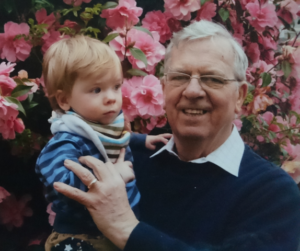
Master John Flood, 2017, with his grandson Sean.
Mullan’s essay discusses the nobility of teaching, including the power of words to wound or heal. From his primary school days he recalls two teachers in particular. The one he recalls with deepest respect and affection is his first male teacher, in Primary 4, Master John Flood, then a young man in his mid-20s. Mullan’s most profound memory of Master Flood is that of a man of great kindness who always made him feel respected. Today they share a friendship.
Nelson Mandela is inaugurated as the first democratically elected President of South Africa
Mullan attended the inauguration of President Nelson Mandela as the guest of Archbishop Desmond Tutu along with AFrI colleague, Joe Murray. Later they attended a symposium on Robben Island to discuss the future use of the former prison that incarcerated many of South Africa’s black leaders, including Nelson Mandela. Archbishop Tutu invited Mullan to address the gathering on the Great Famine Project, as a demonstration of remembering the past in an empowering way.
After 14 years, Don Mullan concluded it was time to leave AFrI. He left AFrI in the knowledge that the organisation was financially stable and he was leaving it with a positive legacy of ideas to build upon. Indeed, almost a quarter of a century after his departure, the Great Famine Project, the Doolough Famine Walk, the Choctaw/Ireland connection and St. Brigid’s Peace Cross Campaign remain solid bedrocks of AFrI’s annual activities.
Concern Worldwide, Ireland’s premier humanitarian agency, asked Mullan to join the agency to help it respond in an appropriate manner to the approaching 150th anniversary of Ireland’s Great Hunger.
Key initiatives Mullan executed during his tenure with Concern Worldwide were the following:
Lecture tour of six major US cities: New York, Boston, Los Angeles, San Francisco, Washington DC and Chicago. His lecture in Chicago led to the setting up of a Concern Worldwide Group in the city which remains, outside of New York, Concern’s second most important hub; a fact acknowledged in the book ‘Aengus Finucane: In the Heart of Concern’ by Deirdre Purcell (Dublin 2015).
A joint lecture tour with Choctaw artist, Gary White Deer, throughout Ireland and Irish Centres in the UK;
A National Geographic documentary with actor Gabriel Byrne;
The support of Irish singer, Mary Black, for the annual Concern Christmas campaign;
During the first visit of President Bill Clinton to Ireland in 1995, Mullan surprised his colleagues when he calmly, and with good humour, worked with the Gardai and the US Secret Service to create an opportunity for a Concern volunteer to meet the US President who placed a US$20 bill in a Concern collection box, after visiting Cassidy’s Pub, just across from Concern’s headquarters on Camden Street, Dublin 2.
Irish Times, August 1995: National Botanic Gardens, Concern Worldwide Great Hunger Commemoration
Mullan’s biggest undertaking was a major gathering at the National Botanic Gardens, Glasnevin, Dublin, on 20 August 1995. On that day in 1845, the Gardens curator, David Moore, noted the presence of the blight bearing fungus within the vegetable plot. Moore knew that the fungus was present on mainland Europe and realised that if it reached Ireland, it could have devastating consequences, given the dependency on the potato by the majority of Ireland poor and dispossessed population. Mullan recognised that this date might be considered the actual beginning of the Great Famine. With colleagues in Concern he organised within the Gardens a moving ceremony, which included speeches, music, reflections and a performance by the Galloping Cat Theatre Company, whose enactment of a desolate funeral scene, silenced the large gathering of public and diplomats, including the British Ambassador, and made the front cover of the Irish Times the following day.
Irish Times, 21 August 1995, Headline
Donal Synott, then curator of the National Botanic Gardens, later stated that the Great ‘Famine’ Commemoration organised by Concern Worldwide, was the highlight to their bi-centenary year.
Mullan facilitated a residency in Ireland for Choctaw Artist, Waylon Gary White Deer, during which Waylon created an exhibition he called ‘The Carrigaholt Collection’, after the village in Co. Clare where he spent three months painting.
Mullan negotiated with the American Ambassador to Ireland, Jean Kennedy Smith, the hosting of the exhibition at the US Embassy. The exhibition was later welcomed to the Bank of Ireland Exhibition gallery on College Green, Dublin 2.
Mullan also arranged for Waylon to appear on the Late late Show with Gay Byrne. White Deer was later to state that it was the most successful exhibition of his career.
During the summer of 1996 the late Alo Donnelly, the first Chief Executive of Concern Universal, a UK-based World Development agency wishing to expand into Ireland, approached Don Mullan having been informed that he was now working freelance.
Over dinner at a Dublin restaurant, Donnelly offered Mullan the job of heading up the agency’s Irish operation. By then Mullan had begun his career in investigative journalism and declined. However, after some reflection and consideration of a number of possible candidates, Mullan recommended a Derry-based associate, Richard Moore.
Moore had participated in Mullan’s re-enactment of the Choctaw Nations ‘Trail of Tears’ walk from Oklahoma to Mississippi in 1992, during which Mullan spoke to him extensively about his humanitarian work with AFrI. During his meeting with Alo Donnelly, Mullan recalled Moore’s expressed wish to do similar work.
Richard Moore in Africa
On Don’s recommendation, Richard Moore was interviewed for the position and subsequently employed and resourced by Concern Universal to set up the Irish section of the charity. As Concern Universal’s origins came from the same seed as Ireland’s leading humanitarian organisation, Concern Worldwide, to avoid confusion its UK counterpart needed to register under a different name. Moore suggested ‘Children in Crossfire‘, the name of a 1974 BBC documentary that he had featured in. In 2006 ‘Children in Crossfire’ separated from Concern Universal and is now an independent charity in Northern Ireland, whose Chief Executive is Richard Moore.
In the Autumn of 2016 Concern Universal rebranded itself as United Purpose.

 of a hut where she lived with her widowed mother and sister. I asked her, “What do you do for food?” She answered, “We borrow food.” I looked around and wondered who even would have enough food to loan. I then asked her, “What do you do when you cannot borrow food?” She replied, “We drink water to fill our stomachs.”
 Don Mullan was inspired to conceive and launch AFrI’s Great ‘Famine’ Project, based on the quotation above. It was delivered in Sean MacDermott Street Church during Bishop Desmond Tutu’s AFrI visit. Within it Mullan heard echoes of Ireland’s Great ‘Famine’ (1845-1852) during which a million people perished and another million fled Ireland as immigrants and refugees.
 during the darkest days of South African apartheid; a bestselling author and an accomplished public speaker with three investigative books that contributed to the establishment of three inquiries (including the longest and most expensive Public Inquiry in British legal history); the co-producer of a trilogy of award-winning movies about the Irish conflict; a documentary filmmaker; creator of the first mobile/cell phone photographic exhibition in the world; the concept developer of three significant historical monuments and campaigns in Ireland, England, the USA and Belgium. In 1993 Don was diagnosed with dyslexia.


 In response to the 500th anniversary of the so-called ‘discovery’ of America by Christopher Columbus, Mullan organised a one-month sponsored




 In the Autumn of 2016 Concern Universal rebranded itself as