Don Mullan (24) is welcomed by an Indian family, Fathima Nagar, Tamil Nadu, India, 1977
While studying Youth and Community Work at the University of Ulster (formally the Ulster Polytechnic) between 1977-79, Mullan spent his 1979 summer holiday’s in India, where he visited Mumbai (formally Bombay), Bangalore, Thiruchirapalli, and the Holy Family Hansenorium at Fathima Nagar, Tamil Nadu, in the deep south of the Indian subcontinent.
There he met a young doctor, Dr. Jacob, who invited Mullan to observe and photograph a series of operations he was conducting on various patients.
What impressed Mullan most was that Dr. Jacob could have chosen a lucrative position in a Western hospital, yet he chose to remain in India where he literally performed miracles is helping young leprosy suffers regain the use of their limbs, especially their fingers and hands.
Before Mullan left the Hansenorium, a young married couple who had met at the hospital, and who had been cured by Dr. Jacob, presented Don with a painting which the husband had painted. It depicted a deer standing by a brook in a tranquil valley. Across the painting, in Tamil, were the words from Psalm 23: 2-3: “Near restful waters he leads me to revive my drooping spirit.” Mullan retains and cherishes the gift to this day.
with Truth”. Mullan was deeply moved by Gandhi’s fortitude and commitment to non-violent change, particularly his emphasis on active non-violence over pacifism.
In 1999, on a return visit to India to interview His Holiness The Dalai Lama in Dharmsala, Mullan, before returning home, visited the site of Gandhi’s assassination on 30 January 1948. Mullan was particularly taken by Gandhi’s saying: “You must be the change you wish to see in the world.”
By coincidence, Mullan was in India when the IRA killed Lord Louis Mountbattenon 27 August 1979. He was deeply moved by the outpouring of grief and sadness with which the Indian people greeted the news. As Britain’s last Viceroy to India, who had overseen India’s Independence, it was clear from newspaper coverage and his conversations with Indian people that Louis Mountbatten was remembered with deep affection and respect.
Parkmore Youth Club, Ormeau Road, Belfast
Joseph Bratty
While studying Youth & Community Work at the Ulster Polytechnic Mullan was required to work at a youth club in Belfast. As a Catholic, he was assigned to a Catholic youth club in the sectarian divided city. Mullan, however, asked to be placed in a Loyalist youth club, as he wished to cross the divide and encounter the common humanity of youth from ‘the other side’. There was considerable risk associated with this decision as the Northern Ireland ‘Troubles’ were still at their height, and a
Scene of Sean Graham’s Bookmakers Massacre, February 1992
Catholic youth worker had been assassinated the year before, less than a mile from his preferred Youth Club, on Belfast’s Ormeau Road. One of his assignments was an essay on a group of students he worked with. Amongst these was a youth named Joseph Bratty, who was latter assassinated by the Provisional IRA just weeks before the 1994 IRA ceasefire, in retaliation for his involvement in the murder of Catholics living in the vicinity of Lower Ormeau Road. Bratty was suspected by security forces of playing a role in, or at least orchestrating, around 15 killings, including the Sean Graham’s Bookmakers Massacre, in February 1992.
Following a presentation at Bologna University, Italy, Mullan was asked to contribute his 1978 essay to their media archives, detailing his experience, which can be accessed by clicking here. In 2015 Mullan was contacted by one of the youth mentioned in the essay, ‘Sammy’, who had found the essay on-line, and both he and Mullan have rekindled their friendship.
Early Work Experience:
Don Mullan began his working life, aged 19, as a successful insurance salesman for Canada Life. However, he quietly resigned his position on ethical grounds. He also worked as a night porter at the Everglades Hotel, Derry, and as a clerical officer at Altnagelvin Hospital, Derry, responsible for coordinating hospital maintenance, before resuming full-time studies at the Ulster Polytechnic (University of Ulster) Jordanstown, in 1977.
I have known Don Mullan through a number of his different roles, including his work with Concern Worldwide and his promotion of the legacy of Fredrick Douglass. I am also aware of his ground breaking work in establishing the facts about Bloody Sunday in Derry in 1972.
The common threads of Don’s life and work have been a deep commitment to justice and human rights as well as a determination to contribute to a better future. He brings to his various causes a huge creativity, a capacity to see connections between unlikely things and an ability to build relationships between people.
And he does all this with good humour, grace and perseverance.
Former CEO Concern Worldwide
Former Director General, Institute of International and European Affairs
Don Mullan, a human rights activist… brims with ideas, big ones, about combating hunger and poverty and injustice — and about the power of history and symbolism to do so. And he gets things done. He counts Archbishop Desmond Tutu, Sister Helen Prejean and Pelé as friends… “Don has this genius for how the lessons of the past can be used to achieve real change in the present.”
Fr. Sean McFerran SDB, founder of AFrI (Action From Ireland) who recruited Mullan as the agency’s first full-time Director
Don Mullan was Director of AFrI (Action from Ireland) for 14 years (1979-1994), a responsibility he assumed at the age of 24. He spearheaded the transformation of the organisation from an ‘aid’ agency into a dynamic justice, peace and human rights organisation. It was here his skills as a concept developer, including re-imagining symbolism, began to find expression.
Fr James O’Halloran SDB
AFrI was founded by Fr Sean McFerran, SDB, in 1975. While studying at the Development Studies Centre, Dublin, Mullan met Fr James O’Halloran SDB, a confrere of the founder. Fr. Jim, as he is affectionately known, spent most of his life working as a missionary in South America during which he became interested in the phenomena of Basic Christian Communities. He is the author of a series of acclaimed books which have been translated into several languages. In later life Fr. Jim became a much sought after lecturer on the subject, travelling extensively in Asia, Africa, the Americas and Europe to speak on Basic Christian Communities. An insight into Fr. Jim’s rich life, dedicated to the gospel of the poor, and his global contribution to the development of such communities, may be accessed by clicking here.
Fr. O’Halloran recommended Don to Fr Sean McFerran and following a number of meetings McFerran offered Don the role of Director, adding that his main reservation was Don’s age, but nonetheless, decided to hand the reigns to him.
Joe Murray
Mullan invited Joe Murray to join the AFrI Executive Committee and later brought him on board as his assistant. After Mullan left AFrI in 1994 to take up a position with Concern Worldwide, Murray assumed responsibility for the organization. He remains in that position today and continues to develop and manage many of the legacy projects and concepts that Mullan introduced.
A number of Don Mullan’s AFrI initiatives can be accessed by clicking the following links:
Don Mullan’s work, as an investigative journalist and humanitarian, stands in its own way as a guiding light and inspiration for those who would aspire to a better world.
1982: Interenational Conference on World Peace and Poverty
Don Mullan’s ability to utilize historical symbolism, as a method of informing and influencing the present day, first manifested itself with a major International Conference on World Peace and Poverty to celebrate the 800th anniversary of the birth of St. Francis of Assisi (1182-1226).
Mullan hitch-hiked from Paris to Assisi in the summer of 1978 with a friend from Derry, John Coyle. They travelled on a budget of 2.50 per day, and slept in a tent. That journey became the inspiration for the international conference in 1982.
Mullan was particularly drawn to the universal appeal of St. Francis of Assisi, which transcended both Roman Catholicism and Christianity. St Francis is the patron saint of peace, animals, ecology and stowaways, all of which offered to Mullan’s creative mind the opportunity to explore related themes pertaining to the local, national and international community. Recalling the quotation of Mahatma Gandhi that ‘”he Earth has enough for everyone’s need, but not enough for everyone’s greed,” Mullan was particularly drawn to St. Francis’ commitment to simplicity of lifestyle which, again, resonated in a world of growing inequalities.
St. Francis with the wolf and lamb
During his time at the Development Studies Centre, Dublin, Mullan came to realise the importance of listening, especially to the voice of the majority world, then referred to as the ‘Third World’. The St. Francis Conference, therefore, had participants from Asia, Africa, Latin America, as well as Europe and North America. The conference was particularly unique as AFrI decided to hold it, not at a conference centre or hotel, but within the inner-city parish of Sean MacDermott Street, involving the local community both as presenters, as well as organizing volunteers.
It was chaired by the Nobel and Lenin Peace Prize winner, Sean MacBride SC, and was attended by, amongst others, Rev. Jesse Jackson and Desmond Tutu (via video, as his passport had been confiscated by the apartheid regime).
The Irish media largely ignored the conference, much to the ire of Sean MacBride who was deeply critical at a poorly attended Press Conference on Monday, 1 October 1982. Unfortunate for AFrI, on the weekend of the conference, an attempted overthrow of the then Taoiseach, Charles J. Haughey TD, had occupied the attention of the Irish media. However, the highly popular BBC Radio programme, ‘Sunday Sequence’, sent an outside broadcasting unit and dedicated an entire programme to the conference.
Related to the St. Brigid’s Peace Cross Campaign, AFrI brought a large group of young people to Assisi in 1995 to explore themes related to justice, peace and human rights.
Mullan is currently thinking about a follow-up conference in 2026 to mark the 800th anniversary of the death of St. Francis of Assisi.
He has begun to explore with members of the Franciscan Order and the Roman Catholic hierarchy the possibility of a five-year global pilgrimage of the relics of St. Francis of Assisi.
Sean MacBride SC became AFrI Special Adviser and Desmond and Leah Tutu accepted Mullan’s invitation to become the patrons of AFrI.
Sam Dash, Professor of Law, Georgetown University Law Centre
Ms. Louise Kantrow Executive Director International League for Human Rights 823 United Nations Plaza Suite 717 New York, NY 10017
Dear Louise:
I very much regret that health reasons prevent me from attending the Defender’s Awards Ceremony. My very special reason for wanting to be with the League on this wonderful occasion was to pay honour and tribute to Don Mullan who will be receiving one of the awards. I have known Don for many years in our common effort to keep alive the meaning of Bloody Sunday to the cause of freedom and democracy in the world.
Don[‘s]… commitment to human rights began in the midst of the cruel hail of bullets shot by British paratroopers which killed so many of his young friends who were demonstrating with him for democracy in Northern Ireland on that tragic day of January 30, 1972. From his survival on that day to the present, Don has been a witness to government abuse of the rights of free people. He has written a lasting account of that horrible day and has probed and investigated other abuses by government and exposed them publically. His voice is constantly heard, often in the United States, reminding a sometimes complacent public of the need to be alert and to speak out for human rights.
Don is a true defender and fully deserving of the Defender’s Award the International League is giving him.
Sincerely,
Sam Dash
You may view a copy of the original letter by clicking here.
Inspired by the generosity of five young boys from his hometown neighbourhood, who made and sold St. Brigid’s Crosses to support his work with AFrI, Mullan developed with them the St. Brigid’s Peace Cross Campaign. The five boys were brothers Eddie and James Doherty, Peter and Maurice McGowan and their friend Neil Mahony. The Nobel and Lenin Peace Prize winner, Sean MacBride SC, travelled to Derry to launch the initiative in 1993.
With Sean McBride SC – sitting: Neil Mahony; standing; James Doherty, Maurice and Peter McGowan, Eddie Doherty
Taking the ancient tradition of making St. Brigid’s Crosses on 1 February, the first day of Spring in Ireland, Mullan helped AFrI reinterpret much of its ancient symbolism in a 20th Century context. Of primary interest was the discovery of the story of Brigid giving away her father’s sword to a poor man. Mullan saw in this story a Celtic parable of disarmament and development.
His research also lead him to the site of St. Brigid’s Fire Temple in Kildare Town, which had burned perpetually for over 2000 years before it was extinguished during the Reformation. Only women could be keepers of the fire. Mullan became determined to help rekindle the ancient flame.
The St. Brigid’s Peace Cross Campaign became the seed of several other ongoing initiatives, including the rekindling of
Sr Mary Teresa Cullen rekindles Brigid’s Fire in 1993
Brigid’s Fire and the annual Feile BrideFestival, Kildare (1993), and greater involvement by the Brigidine Sisters in Justice and Peace initiatives, including the establishment of Solas Bhride Centre and Hermitages. Mullan developed a strong relationship with the Irish Brigidine Sisters and invited Sr. Eileen Deegan onto the AFrI Executive Committee, a role she fulfilled for several years.
Working with Mullan, Youghal Carpets, Cork, designed a hand-woven carpet depicting St. Brigid giving away her father’s sword to the mendicant. Two carpets, containing over 100,000 individual woolen pieces, were made by Irish school children and presented to the peoples of the USA and the former USSR.
Susan G. Hackley, Program on Negotiation, Harvard Law School, Harvard University
Susan G Hackley, PON, Harvard Law School, Harvard University
Don Mullan visited the Program on Negotiation at Harvard Law School in 2004 for a discussion on the film “Bloody Sunday” and the event of that day in 1972 in Derry, which he had witnessed as a schoolboy.
Don was extremely generous with his time, and our faculty and students learned a great deal from his personal accounts of the conflict in Northern Ireland and the subsequent investigation into the events of Bloody Sunday. His discussions about his book, Eyewitness Bloody Sunday, helped explain the roots of the conflict in Northern Ireland, and his personal quest for justice was an inspirational story of how one individual can make a difference.
Many of us felt that Don’s talks were highlights of the spring semester, and we would highly recommend him to others looking for a knowledgeable speaker on the Irish conflict and human rights.
We also encouraged Don to apply for the prestigious Nieman fellowship offered by Harvard University. The fellowships are awarded to working journalists of accomplishment and promise for an academic year of study in any part of the university.
We also encouraged Don to stay in touch with his future plans and any ways we can be of assistance. Indeed, we have been delighted to welcome Don back on other occasions.
In 1983-84 Don Mullan spent six months in the diocese of Recife and Olinda in Brazil’s north-east, then under the leadership of Dom Helder Camara, a world figure renowned for advocating social justice and change through non-violence. Mullan had been deeply influenced by two books written by Camara: The Desert is Fertile (1976) and Spiral of Violence(1971). These small volumes deeply influenced his work with AFrI and remain sources of inspiration to this day.
Dom Helder with Don Mullan in Durham, England, 1981
While in Brazil Mullan learned of an area north of Recife known as the Seca region where drought had raged for over a decade, causing famine and mass migration. Working with his AFrI colleagues, and Irish missionaries in the region, he helped organize relief to the area.
In December 2016 Mullan returned to the diocese of Recife and Olinda to testify before an Ecclesial Commission investigating the sanctity of Dom Helder Camara.
Mullan’s favourite quotations of Helder Camara are the following:
“Without justice and love, peace will always be the great illusion.”
–
“When I give food to the poor, they call me a saint. When I ask why the poor have no food, they call me a communist.”
–
“Become an expert in the art of discovering the good in every person.
No one is entirely bad.
Become an expert in finding the truthful core in views of every kind.
The human mind abhors total error.”
Rev. Denis Holtschneider, President, DePaul University
As president of DePaul University in Chicago, the largest Catholic university in the United States, I can give Don Mullan my strongest recommendation. My conversations and interactions with him reveal him to be a man of great principle, insight, collaboration and forgiveness. He proved his effectiveness to bring about positive change and reconciliation through his book “Eyewitness Bloody Sunday: The Truth,” … [which contributed to an] historic government apology.
Don is a spellbinding storyteller who brings a passion for justice to the fight. He is tireless and generous…
Don has served many roles throughout his life: witness, historian, writer, educator and human rights crusader. He has used nonviolence to correct historical errors and deliver justice to those denied. He is a determined person and has the ability to overcome personal hurdles, like his struggle with dyslexia. He commands respect and has demonstrated his ability to bring people together around a cause. Perhaps his best contribution is his imagination and the capacity to put unusual ideas together and dream of a different future.
“The protest by Mary Manning and her colleagues was exceptional—they were joined only by a single worker at another store—and the Irish Congress of Trade Unions withheld even rhetorical backing for over a year. Nor at first did their actions appear to engender much sympathy among members of the public… Public perceptions of the strike were to change, however. There was growing support for the movement, partly as a consequence of a meeting in London in December between the strikers and Archbishop Desmond Tutu while he was on his way to collect the Nobel Peace Prize in Oslo.”
In the summer of 1984 Bishop Desmond Tutu, then Secretary–General of the South African Council of Churches (SACC), accepted Don Mullan’s invitation to visit Ireland as the guest of AFrI. It was the beginning of an enduring friendship between both men.
Shortly after Tutu’s visit to Ireland, Christine Mulvey, an AFrI colleague, informed Mullan that an anti-apartheid strike had begun at the Henry Street branch of Dunnes Stores in Dublin, and recommended he investigate. After visiting the picket line and meeting with Mary Manning, Karen Gearon and other strikers Mullan recommended that AFrI should support the young strikers in whatever way possible.
Fortuitously, that same year, Desmond Tutu won the Nobel Peace Prize. Mullan informed him about the strike and Tutu, who had already begun to call for economic sanctions against the apartheid state, agreed to publicly back the young shop workers. At Mullan’s suggestion, Tutu agreed to meet
Bishop Desmond Tutu meets Dunnes Stores Strikers at Heathrow Airport
representatives of the Dunnes Stores Strikers at Heathrow Airport en route to Oslo. The meeting proved to be a major turning point in the strike. For the duration of the strike Mullan was Tutu’s adviser.
In 1985 Mullan negotiated with the SACC and Bishop Tutu, then the 1st black Bishop of Johannesburg, to invite the Dunnes Strikers to South Africa for the first anniversary of their strike. Along with the strikers he was detained at Jan Smuts Airport and refused entry. The strikers, their trade union representative, Brendan Archbald, and Mullan, were all handed a legal document before being escorted onto a London bound flight. The document informed them that the non-visa privilege, available to Irish and British citizens, had been withdrawn by the apartheid regime.
Mullan raised the funding for the majority of the strikers to travel to South Africa.
President Nelson Mandela and Bono of U2
Later in 1985 Principle Management called Mullan and asked him to bring the Dunnes Stores Strikers to Windmill Studios as U2’s Bono wished to record with them his contribution to the Artists Against Apartheid song, I ain’t gonna play Sun City. Don collected some half dozen strikers from the picket-line on Henry Street and brought them to the studio where Bono welcomed them.
In April 1987, the same month the strike ended, Don Mullan’s first child, Therese, was born. The Dunnes Stores Strikers, despite their hardship, bought her a baby high-chair, which all of the Mullan’s three children enjoyed.
At Mullan’s invitation, Archbishop Desmond Tutu and his wife, Leah, became joint patrons of AFrI.
Woody Kerkeslager, former Mayor of Madison, New Jersey
Don Mullan’s association with our town of Madison New Jersey has been brief but spectacular…
Don is able to reimagine Madison, the Rose City, precisely because he brings an outsider’s fresh and keen eye to a town that many of us think we know so well. But it is his humanitarian focus and his soaring imagination and creativity that allow him to see an opportunity to reinvigorate our beautiful town without changing the things we love so well.
1984: Fr Niall O’Brien and The Negros Nine Campaign
Fr Niall O’Brien and his mother Olivia, following his return to Ireland in 1984
Don Mullan returned to Ireland from Brazil in March 1984. By then the case of an Irish missionary Fr. Niall O’Brian, who had been imprisoned in the Philippines together with eight companions on trumped-up charges, was making headlines. AFrI was actively engaged in the campaign to have them released, primarily through the involvement of a member of the AFrI Executive Committee, Jack Hynes, a former missionary, who had spent most of his adult life supporting the struggle for human rights on Negros Island, the Philippines, the same island where O’Brien had been imprisoned. Hynes and Mullan had become friends during the summer of 1978 while Mullan was a volunteer with the Catholic Agency for World Development, Trócaire.
Fr. O’Brien was working on the sugar-rich along with an Australian missionary, Fr. Brian Gore, Filipino priest Fr. Vincente Dangan, and six Filipino co-workers: Geronimo Perez, Lydio Mangao, Jesus Arzaga, Ernesto Tajones, Peter Cuales and Conrado Muhal, when they were imprisoned in May 1983. They were accused of the murder of Mayor Pablo Sola and four companions, on the outskirts of the town of Kabankalan, 88 kilometers south of the capital, Bacolod City.
The accusations were a fabrication and an attempt to undermine their work for justice on behalf of peasant labourers
The Negros Nine in their prison cage
and their families – virtual slaves to powerful sugar barons whose loyalty was with the Filipino dictator, Ferdinand Marcos and the Filipino military, including dedicated death squads, ruthlessly imposing martial law.
Working closely with other development agencies, including Trocaire, human rights groups, missionary orders and the Filipino Irish Group, Mullan joined Jack Hynes and his colleague Joe Murray in mobilizing popular and political support for the Negros Nine in the lead-up to the 1984 visit of President Ronald Reagan to Ireland. This included a hugely effective AFrI initiative, the brainchild of Murray, of placing Fr. O’Brien’s mother, Olivia, inside a makeshift prison cage outside the US Embassy in Dublin and, again, outside the Garden of Remembrance at the very moment President Regan’s Air Force One landed in the Irish capital. By then the profile of the Negros Nine was such in Ireland that President Regan was asked on Irish television to intervene. Shortly afterwards they were released and the charges dropped.
Upon his triumphant return home to Ireland, he was greeted by thousands of people at Dublin Airport, Whitehall Parish, Sean MacDermott Street Parish and the Mansion House, Dublin. Don Mullan was asked to travel with Fr O’Brien from Dublin Airport into the city in recognition of the seminal work done by AFrI and other Irish justice and human rights organisations. The visit to the inner-city parish of Sean MacDermott Street was particularly poignant as it was the location of AFrI’s headquarters and AFrI had engaged the local people in fighting for the freedom of the Negros Nine.
The 1984 RTE Report of Fr. O’Brien’s homecoming can be viewed by clicking here:
On 6 October 1984, Don Mullan and Margaret Beatty were married. As well as families and friends, all of Mullan’s AFrI colleagues and Executive Committee attended, as did the AFrI special adviser, Sean MacBride SC. Many AFrI supporters also attended, including the Derry boys who had inspired the St. Brigid’s Peace Cross Campaign. AFrI’s patron, Fr Robert Nash SJ, officiated, assisted by, amongst others, Fr. Niall O’Brien. Mullan’s AFrI colleague, Joe Murray, was groomsman.
On the evening of their wedding AFrI’s headquarter’s, The Third World Centre, Summerhill, Dublin, was attacked and set on fire. It was the third attack in as many months, but on this occasion it was to end AFrI’s very positive engagement with the local Summerhill and Sean MacDermott Street community. The newly weds spent the afternoon of their first day of marriage sifting through the rubble of AFrI before leaving on their honeymoon around Ireland.
Irish Independent, Monday 8 October 1984
AFrI moved temporarily to nearby Buckingham Street where they were welcomed by the Prisoners Rights Organisation (PRO). Following discussions with Mullan and his colleagues, the PRO made discreet enquiries locally to determine whether the attack had been carried out locally or by outsiders. Originally, when AFrI suffered its first attack, its premises had been ransacked in a manner that could have been the work of petty thieves from the locality looking to see if money was kept on the premises. They got nothing. The second attack and finally third attack in which its premises were set on fire, showed a degree of intent and intimidation that seemed beyond the motivation of petty thieves. Furthermore, Mullan and his colleagues had developed a very good relationship with the local community, the highlights of which were the 1982 international conference on world peace and poverty; the stop-off by Fr Niall O’Brien upon his return to Ireland following his imprisonment in the Philippines; and the visit by Bishop Desmond Tutu in the summer of 1984.
Karen Gearon, Dunne’s Stores Striker, with AFrI Special Adviser, Sean MacBride SC
AFrI suspicions that the attack may have been my outsiders was heightened by the opinion of the organization’s Special Adviser, Sean MacBride SC. All three attacks happened in the aftermath of the visit to Ireland by Bishop Desmond Tutu, hosted by AFrI, during which he again called for economic sanctions against the apartheid regime. And, more recently, Mullan had persuaded Tutu to publicly declare his support for the Dunne’s Stores Strikers.
MacBride was of the opinion that the attacks may have been politically motivated by agents of the apartheid state whom, he said, were active throughout the world; and who were tasked with disrupting the work of groups and organizations who were running effective campaigns against the regime.
Irish Independent Report, 8 October 1984
Following their investigations, the Prisoners Rights Organisation informed AFrI that their contacts in the locality had reported back to them that locals had not been involved in the attack.
Those responsible were never identified.
Within a couple of months of the destruction of their premises, AFrI moved to premises on Mountjoy Square, Dublin. A major part of AFrI’s spirit – its relationship with the Sean MacDermott Street community – was lost.
The move, however, was to have a silver lining for Mullan. A floor above the new AFrI offices in Mountjoy Square housed the premises of Wolfhound Press, one of Ireland’s leading publishers, founded by Irish poet Seamus Cashman. Occasionally Mullan and Cashman met on the stairwell leading to their respective offices. The two men became friends, a friendship which remains strong to this day.
Poet and Publisher, Seamus Cashman
In 1996, when Mullan was working on Bloody Sunday, it was to Seamus Cashman and the Wolfhound Press he turned. Their partnership was to play a significant role in changing the course of history.
Don Mullan’s reputation is legendary as an indomitable and passionate campaigner for human rights, for truth, for reconciliation through commemoration and for peace-building.
I only have to think of the long journey to the truth about Bloody Sunday to be reminded of Don’s huge contribution to that long and unsatisfactory journey, through the mills of distortion to the final light of honesty and vindication. And yet it is only one part of Don’s remarkable story of championing causes others neglected, nursing them into public consciousness and helping us grow through their telling and retelling. From St Brigid’s fire, to the Famine, from Frederick Douglass to the Fields of Flanders, his never still mind insists on opening fresh navigation channels to be explored.
Don Mullan’s commitment to fundamental human rights which underpins everything, and unifies and strengthens each project, gives us all renewed faith in humanity and its capacity for good.
I am looking forward to seeing where Hope Initiatives International will take us.
1985 – 1987: Fr Rudy Romano and the movie ‘Missing’
‘As a family, we were lucky to learn that Charles was dead. The torture of not knowing is the cruelest of all.’
– Joyce Horman
Fr Rudy Romano was a Filipino Redemptorist priest associated with the Irish province. He was committed to the work of social justice and joined the popular movement for political and economic change. On 11 July 1985 he disappeared and has not been seen since, presumed murdered by a pro-Marcos death squad. Amongst the campaigns Mullan spearheaded in AFrI was the sending of 1000 postcards to the head of the Filipino military who later complained about them to the head of the Redemptorist Fathers in the Philippines, and asked that the people of Ireland stop sending them. That news was a confirmation that we were on the right track and we intensified our efforts.
AFrI also funded a documentary film about the disappearance of Fr. Romano and the inconsistencies in the Filipino
Fr. Rudy Romano
State’s denials about his whereabouts. The documentary was featured on RTE’s main television news on the night it was publicly screened at Trinity College, Dublin, on 26 April 1987, the same day Mullan’s first child, Thérèse, was born.
To help highlight the campaign, Mullan and his AFrI colleagues organized a special screening of the 1982 Costa Gavras movie ‘Missing’, about the disappearance and murder of Harvard graduate, Charles Horman, following the US-backed overthrow of the Chilean President, Salvador Allende in 1973. Charles’ young widow, Joyce (played by Sissy Spacek), and his father and mother, Ed (played by Jack Lemmon) and Elizabeth, came for the screening at the Savoy Cinema, Dublin, and stayed with the Mullan family in their modest home in Clondalkin, Dublin.
Joyce Horman, left, and Terry Simon, right, who both feature in the movie ‘Missing’; during a reunion with the Mullans, New York, 2007
At the end of the screening Joyce addressed the packed cinema stating: ‘As a family, we were lucky to learn that Charles was dead. The torture of not knowing is the cruelest of all.’
The Mullan family on a visit to the home of Elizabeth and Joyce Horman, Manhattan, NY, in 1988.
Elizabeth Horman, a distinguished New York artist, returned to her home in Manhattan where she completed two paintings reflecting on her visit to Ireland. One, of children playing on a swing at a tree close to Mullan’s home; and the other portraying a young Don Mullan in a field, seeking a lost sheep. She told Mullan that it was how she thought of him.
Detail of Elizabeth Horman’s painting, depicting Don Mullan
Following the death of Ed Horman in 1991, Elizabeth presented the painting of the children to Don on a visit to New York later that year. She told him that it was Ed’s favorite painting and it hung on the wall of his nursing home room until he died. Elizabeth Horman passed away on May 10, 2001, aged 96.
The Mullan family and Joyce Horman remain good friends.
Like millions of boys around the globe, Don Mullan’s ambition was to become a professional footballer like Gordon Banks and, one day, play for his country. And, like millions of such boys, that never happened for various reasons. But the friendships he made and the discipline he learned from the game ultimately helped to form Don’s character and make him a better person. And that is the greatest result sport can hope to achieve.
At all levels, sport should not be about winning at any cost. Its primary goal should be about helping young people to become better, more healthy and caring citizens. That goal is far more important than winning medals, even World Cup and Olympic medals. And, thankfully, that’s what sport did for Don.
(From the foreword to ‘The Boy Who Wanted to Fly’ by Don Mullan)
“Every gun that is made, every warship launched, every rocket fired signifies, in the final sense, a theft from those who hunger and are not fed, those who are cold and are not clothed. This world in arms is not spending money alone. It is spending the sweat of its laborers, the genius of its scientists, the hopes of its children… Under the cloud of threatening war, it is humanity hanging from a cross of iron.”
President Dwight D. Eisenhower, April 1953
Mullan created AFrI’s ‘Just a Second’Campaign. Its primary objective was to demonstrate the wastage of the Arms Race in a world of hunger and poverty. The campaign, working with schools in Ireland, raised the equivalent of ten-seconds of Arms Race expenditure (based on UN figures) 1980s to:
(i) fund small poverty projects in the developing world and
(ii) demonstrate how resources could be used for life-giving rather than death dealing purposes.
Amnesty International, quoting the think-tank journal ‘Solutions’ estimate that the global arms trade is currently approaching US$100 billion annually.
AFrI made available the results of the ‘Just a Second’ campaign in a publication by the same name.


 Don Mullan, a human rights activist… brims with ideas, big ones, about combating hunger and poverty and injustice — and about the power of history and symbolism to do so. And he gets things done. He counts Archbishop Desmond Tutu, Sister Helen Prejean and Pelé as friends… “Don has this genius for how the lessons of the past can be used to achieve real change in the present.”


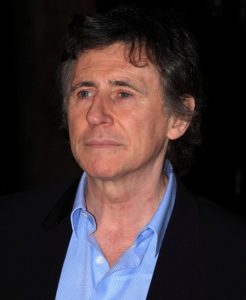 Don Mullan’s work, as an investigative journalist and humanitarian, stands in its own way as a guiding light and inspiration for those who would aspire to a better world.


 In 1983-84 Don Mullan spent six months in the diocese of Recife and Olinda in Brazil’s north-east, then under the leadership of
 Mullan my strongest recommendation. My conversations and interactions with him reveal him to be a man of great principle, insight, collaboration and forgiveness. He proved his effectiveness to bring about positive change and reconciliation through his book “Eyewitness Bloody Sunday: The Truth,” … [which contributed to an] historic government apology.


 Don Mullan’s association with our town of Madison New Jersey has been brief but spectacular…


 Don Mullan’s reputation is legendary as an indomitable and passionate campaigner for human rights, for truth, for reconciliation through commemoration and for peace-building.

 To help highlight the campaign, Mullan and his AFrI colleagues organized a special screening of the 1982 Costa Gavras movie ‘Missing’, about the disappearance and murder of Harvard graduate,


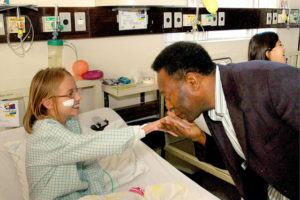 Banks and, one day, play for his country. And, like millions of such boys, that never happened for various reasons. But the friendships he made and the discipline he learned from the game ultimately helped to form Don’s character and make him a better person. And that is the greatest result sport can hope to achieve.
 “Every gun that is made, every warship launched, every rocket fired signifies, in the final sense, a theft from those who hunger and are not fed, those who are cold and are not clothed. This world in arms is not spending money alone. It is spending the sweat of its laborers, the genius of its scientists, the hopes of its children… Under the cloud of threatening war, it is humanity hanging from a cross of iron.”